In the realm of filmmaking, every shot serves a purpose, contributing to the narrative, mood, and character development. Among the myriad techniques at a filmmaker’s disposal, the point-of-view (POV) shot stands out as a powerful tool for engaging the audience and enhancing storytelling.
A point-of-view shot (also known as POV shot, first-person shot, or subjective camera) is a film scene—usually a short one—that is shot as if through the eyes of a character (the subject). The camera shows what the subject’s eyes would see.
Let’s delve into five compelling reasons why incorporating POV shots can elevate the impact of a scene.
1. Immersive Experience:
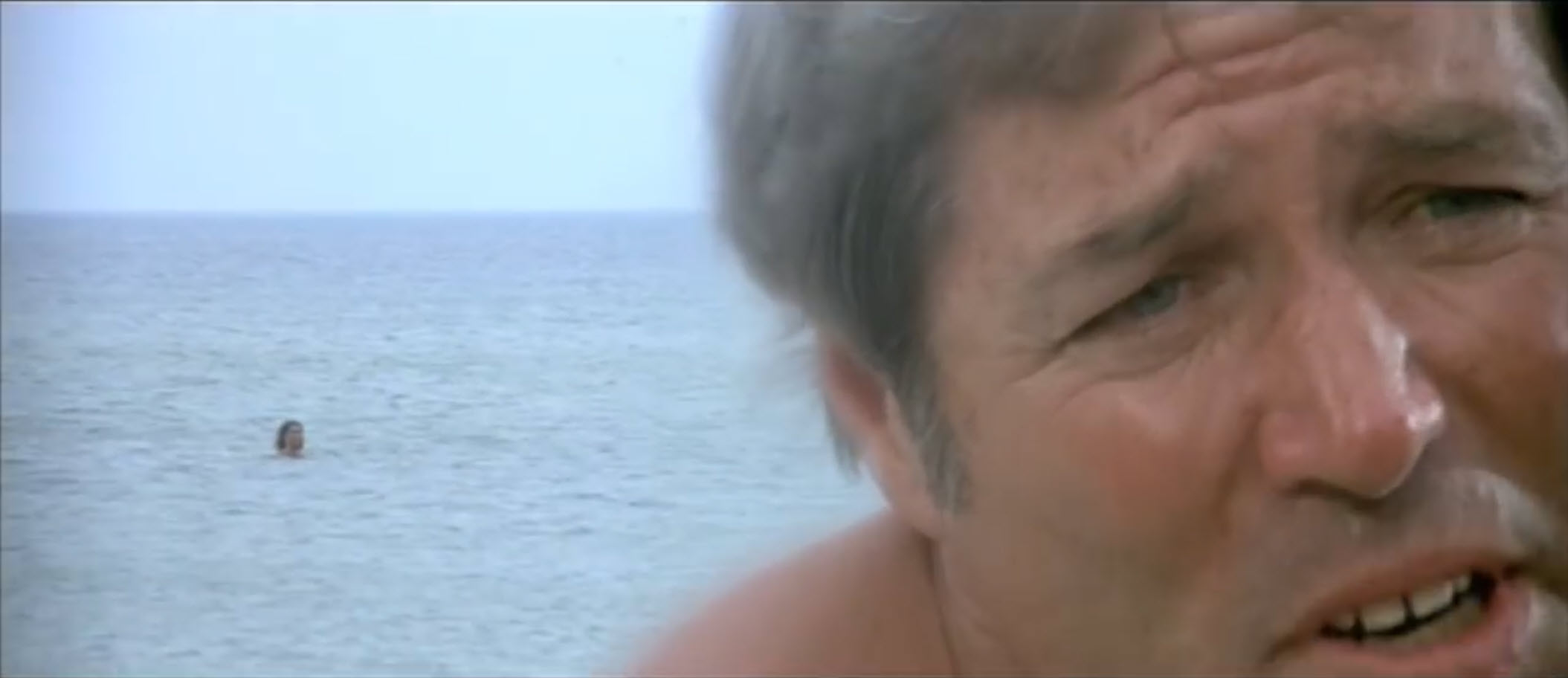
“Jaws” dir. Steven Spielberg – still frame
One of the primary functions of a POV shot is to immerse the audience in the character’s perspective, allowing viewers to see the world through their eyes. This technique effectively places the audience in the character’s shoes, intensifying emotional connection and empathy. In Steven Spielberg’s iconic film Jaws, POV shots are utilized to convey the tension and urgency experienced by the main character as he converses with a fellow beachgoer while simultaneously keeping a watchful eye on a woman in the water. This dual focus emphasizes the character’s awareness of the looming danger posed by the shark, heightening suspense and drawing the audience deeper into the narrative.
2. Enhanced Performance Impact:

“Lady in the Lake” dir. Robert Montgomery – still frame
Directing the camera to capture the actor’s performance directly uniquely engages the audience, intensifying the emotional impact of the scene. In films like Lady in the Lake, the use of POV shots creates a sense of intimacy as characters gaze directly into the camera, forging a powerful connection with the audience, and amplifying the intensity of the moment. However, it’s worth noting that this technique may lose its effectiveness if overused throughout an entire film. Barry Jenkins, renowned for his masterful storytelling in films like “Moonlight,” demonstrates the power of sparingly employing actors’ direct gazes into the camera, enhancing emotional resonance while maintaining narrative integrity.
3. Perspective Revelation:

“Smack My Bitch Up” by Prodigy dir. of music video Jonas Åkerlund – gif
POV shots offer filmmakers a potent tool to shock and surprise audiences by subverting expectations. In the music video ‘Smack My Bitch Up’ by Prodigy, the protagonist’s violent and erratic behavior leads viewers to presume the main character is male, as it aligns with typical stereotypes. Throughout the video, this assumption is reinforced, immersing the audience in a familiar narrative. However, the shocking finale reveals the protagonist’s true identity, defying stereotypes and delivering an unexpected twist that leaves a lasting impact. Despite it being just a music video for a dance track, upon revisiting it after all these years, I can’t help but recognize its deeper social criticism and underlying meaning. This deliberate manipulation of audience assumptions demonstrates the raw power of POV shots to provoke visceral reactions and challenge societal norms.
4. Distorted Perspective:
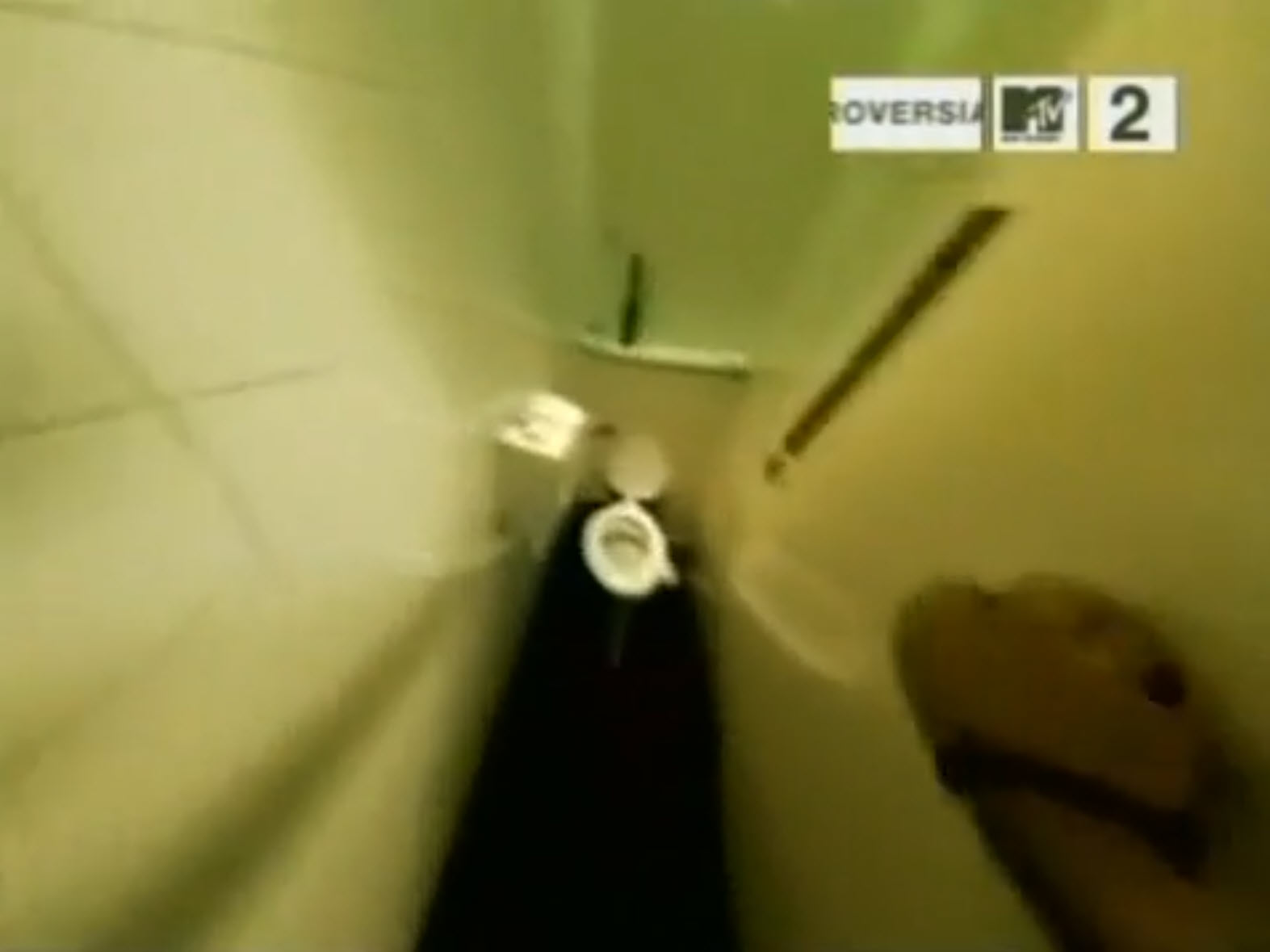
“Smack My Bitch Up” by Prodigy dir. of music video Jonas Åkerlund – gif
POV shots can be utilized to portray a distorted or unconventional perspective, emphasizing characters who perceive the world differently. In the music video ‘Smack My Bitch Up’ by Prodigy, distorted POV shots depict the disorienting effects of drug use, providing insight into the altered state of the protagonist’s mind. This portrayal immerses the audience in the chaotic and disjointed world of the character, challenging their perceptions and evoking a sense of unease.
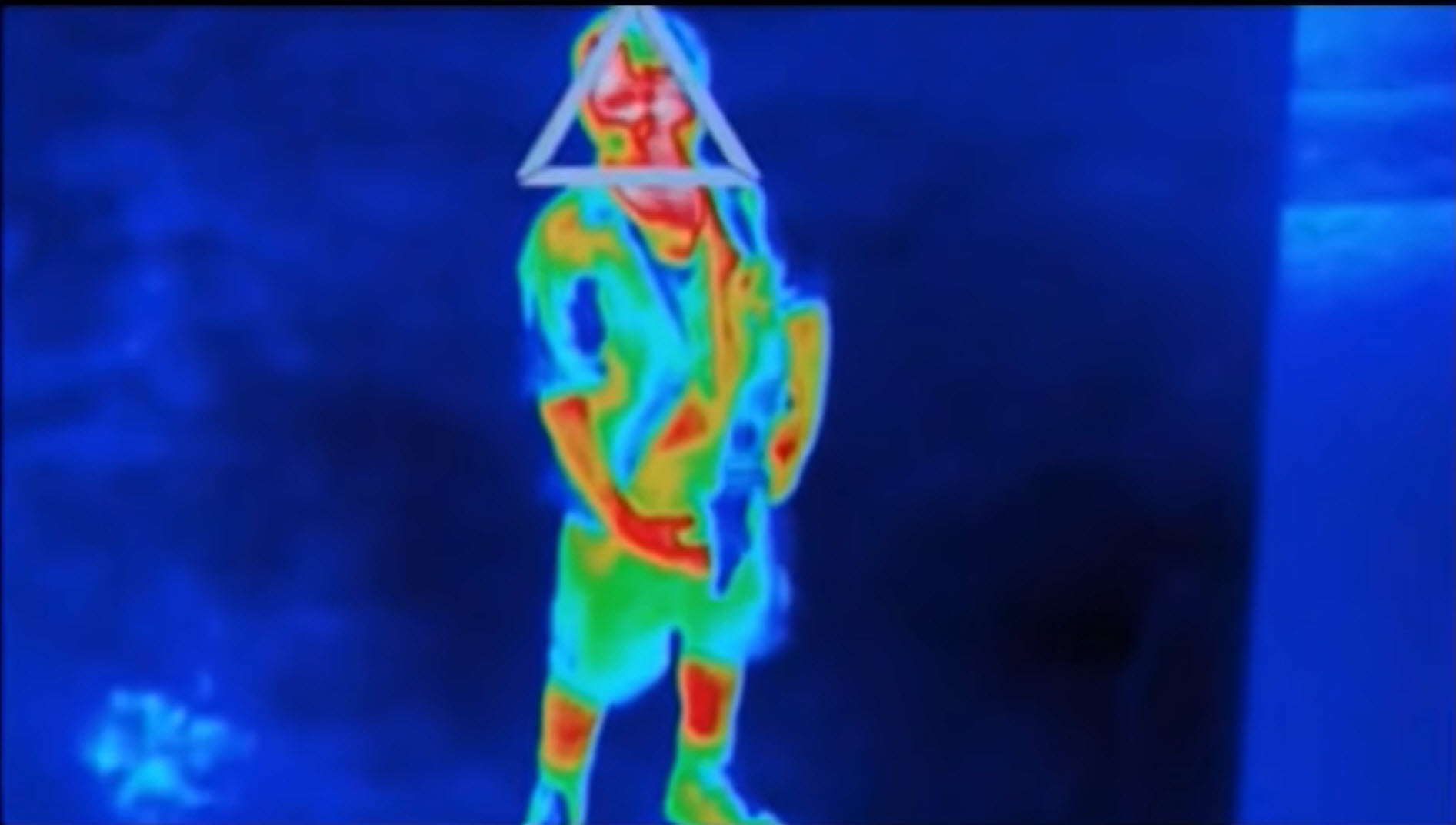
“Predator dir. John McTiernan – still frame
Similarly, in films like Predator and Terminator, the inhuman perspectives of aliens and robots are captured through POV shots, serving as eye candy and contributing to the genre’s aesthetic. By presenting the world from the vantage point of these non-human entities, filmmakers provide visual spectacle and enhance the overall experience for the audience, aligning with the expectations and conventions of the genre.
5. Character Detachment and Barrier Representation:
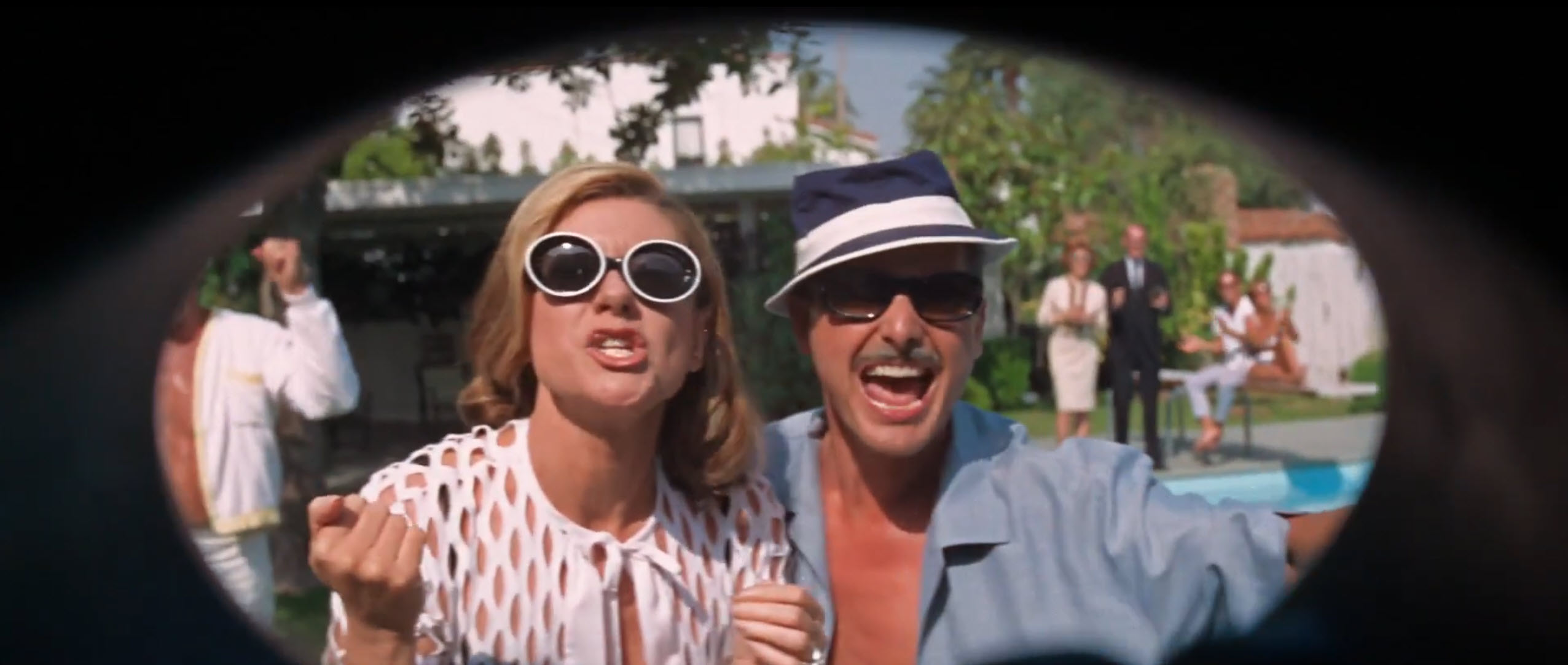
“The Graduate” dir. Mike Nichols – still frame
Finally, vignettes of visors often serve as a visual cue to indicate that a character is peering through binoculars, providing a window into their perspective. While primarily used to showcase what the character is seeing, these cinematic devices can also carry deeper symbolic and dramatic significance, as demonstrated in Mike Nichols’ seminal film The Graduate. Let’s explore how the use of visors as a narrative device transcends mere observation to convey profound emotional and thematic undertones.
POV shots serve as a powerful contrast to depict the detachment of characters from their surroundings. In the iconic scene from The Graduate, the use of a scuba diving mask symbolizes the protagonist’s isolation amidst a lively garden party. As sunlight illuminates the joyous gathering, the protagonist remains distant, lonely, and confused. The vignette of a scuba diving suit further accentuates his detachment, highlighting the stark contrast between his inner turmoil and the external facade of happiness. Moreover, the director employs sound design to deepen the sense of isolation; the main character can’t hear his parents talking to him and laughing. Instead, he is enveloped in the sound of his own breathing inside the scuba diving suit, intensifying the feeling of solitude and disconnection. Through this multifaceted approach, filmmakers effectively convey the character’s emotional disconnect and inner conflict, adding depth to the narrative and enhancing audience empathy.
Point-of-view shots are a versatile and potent cinematic device, capable of enriching storytelling, intensifying emotional impact, and immersing the audience in the character’s perspective. Whether used to evoke empathy, suspense, or unease, POV shots remain a fundamental tool in the filmmaker’s arsenal, offering endless possibilities for creative expression. So, the next time you’re crafting a scene, consider the power of the POV shot to captivate and engage your audience in ways that transcend the screen.
References:
Definition of POV: https://en.wikipedia.org/wiki/Point-of-view_shot#cite_ref-tilta_5-0
Experience the immersive tension of POV shots in “Jaws” here.
Experience the impact of sparingly used POV shots in “Lady in the Lake” here.
Experience the shocking perspective revelation in “Smack my bitch up” music video here.
Experience the inhuman perspective in “Predator” here.
Experience the character detachment in the final scene of “The Graduate” here.